
What to Do If You're Injured in a Car Accident as a Passenger
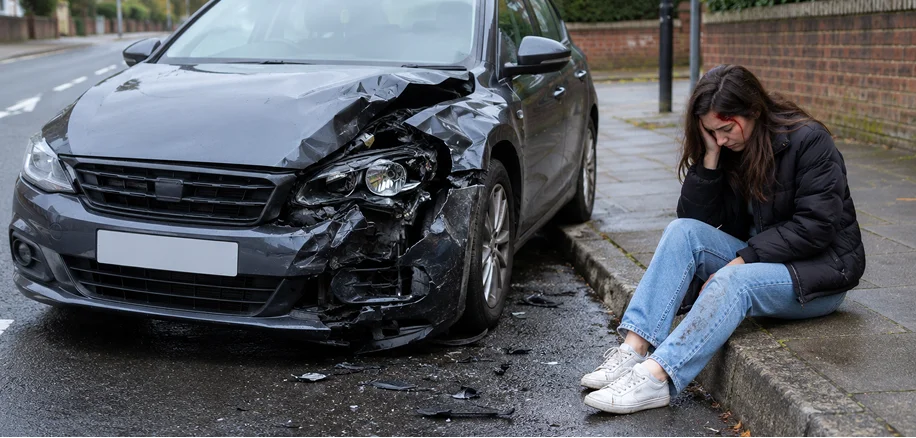
You were a passenger in a friend's car when another vehicle crashed into you. Or you were in a taxi or a work colleague's vehicle. The accident wasn't your fault, and you had no control over what happened. Being injured in a car accident can leave you with more questions than answers, especially when you were not driving. You may be dealing with pain, medical appointments, time off work and questions about who is responsible.
If you are considering a passenger in a car accident claim, your first priority should be getting medical attention, recording what happened and keeping evidence of your injuries and financial losses. Depending on the circumstances, you may be able to claim compensation from the person responsible for the accident.
This guide explains everything you need to know as an injured passenger: your legal rights, who to claim against in different scenarios, how much compensation you can receive, and the step-by-step claims process in England and Wales.
What Should You Do After a Car Accident as a Passenger?
What you do immediately after an accident can help protect both your health and any potential claim.
- Get medical attention
Do not assume that you are uninjured because you feel fine immediately after the collision. Some injuries, including whiplash and other soft-tissue injuries, can become noticeable later.
If you have suffered a serious injury, call 999 or ask someone at the scene to get medical assistance. For less serious injuries, arrange an appropriate medical assessment and follow the advice you receive.
Medical records can also provide important evidence of your injuries and their connection to the accident.
- Record the accident details
If you are physically able to do so, make a note of:
- The date, time and location of the accident
- The registration numbers of the vehicles involved
- The names and contact details of the drivers
- Insurance details, where available
- Names and contact details of witnesses
- What you remember about how the collision happened
If it is safe, take photographs of the vehicles, road layout, traffic signs and any visible injuries.
- Report to the police
Some accidents need to be reported to the police, particularly where someone has been injured, a driver fails to stop or there may have been an offence.
If an uninsured or untraced driver was involved, reporting the accident can also be important when pursuing a claim through the Motor Insurers’ Bureau (MIB). The MIB states that hit-and-run accidents must be reported to the police before an untraced-driver claim is submitted.
- Keep evidence of your losses
Keep payslips, receipts, treatment invoices, travel records and other documents showing costs caused by your injury.
These records can help support financial losses in addition to compensation for the injury itself.
Can a Passenger Claim Compensation After a Car Accident?
Yes. In many circumstances, they can, when another party was legally responsible for causing the accident and the passenger suffered an injury or loss as a result.
Being a passenger does not prevent you from making a personal injury claim. However, compensation is not automatic simply because you were in a vehicle when a collision happened. The circumstances of the accident and the evidence available will determine who is responsible.
You may be able to claim if:
- Another driver caused the collision.
- The driver of the vehicle you were travelling in was negligent.
- Both drivers contributed to the accident.
- An uninsured or untraced driver caused the collision, subject to the relevant MIB rules.
The important point is that your legal position is separate from that of the driver. If the driver you were travelling with caused the accident through negligence, you may still have a claim even if that person is a friend, relative or colleague.
Who Does a Passenger Claim Against?
One of the most confusing aspects of a passenger claim is understanding who you can claim against. This depends on how the accident happened and who was responsible. In some cases, more than one driver may be liable.
If another driver caused the accident
If the other driver was at fault for the accident, your claim would normally be pursued against that driver's motor insurer.
For example, if another driver went through a red light and crashed into the vehicle you were travelling in, their insurer may be responsible for dealing with your injury claim.
If the driver you were travelling with caused the accident
You may be able to claim against the motor insurer of the vehicle you were travelling in if the driver's negligence caused your injuries.
This can feel uncomfortable when the driver is a friend, family member or colleague. However, making a claim does not automatically mean that you are personally taking them to court. In many cases, the claim is dealt with through the driver's motor insurance.
If both drivers contributed
Sometimes, two or more drivers may have contributed to the accident. For example, another driver may have caused the collision while the driver you were travelling with also contributed to what happened.
In these situations, the evidence will be used to determine how responsibility should be divided. This can affect the amount of compensation you receive.
If the driver was uninsured or untraced
If an uninsured or untraced driver caused the accident, the Motor Insurers' Bureau (MIB) may be able to deal with your claim, subject to the applicable eligibility rules. You can check your eligibility with the Motor Insurers’ Bureau website.
What If You Were a Taxi, Private Hire, Bus or Coach Passenger?
You can still potentially make a claim if you were injured while travelling as a passenger in a taxi, private hire vehicle, bus or coach. The circumstances of the accident will determine who may be responsible for your injuries.
If you were travelling in a taxi or private hire vehicle, keep details such as:
- Vehicle registration
- Driver's name or licence details, where available
- Booking confirmation
- Journey details, including the date and time
If you were injured while travelling on a bus or coach, keep your ticket or booking information and note the route, vehicle number and driver's details if possible.
Your claim may involve the insurer of another driver, the taxi or private hire operator, or another party, depending on how the accident occurred. These details can provide useful evidence if you need to pursue Taxi & PCO Accident Claims after an accident.
What Injuries Can a Passenger Claim For?
Passengers can suffer many of the same injuries as drivers, including whiplash, fractures, back injuries, head injuries and psychological trauma.
In 2024, car occupants accounted for 70,089 reported road casualties in Great Britain, representing 55% of all reported casualties. The Department for Transport also recorded 692 fatalities among car occupants that year.
Injuries following a collision can include:
- Whiplash and other neck injuries
- Back and spinal injuries
- Shoulder injuries
- Broken or fractured bones
- Head and brain injuries
- Chest or internal injuries
- Soft tissue injuries
- Psychological injuries
- Serious spinal cord injuries
The seriousness of the injury, how long it lasts, and its effect on your everyday life can all affect the value and complexity of a claim.
Whiplash Compensation
For eligible road traffic accidents in England and Wales occurring on or after 31 May 2025, the government has introduced updated fixed tariffs for qualifying whiplash injuries lasting up to two years. The amount depends on how long the injury lasts and whether a qualifying minor psychological injury is also present.
Tariff for whiplash injuries occurring on or after 31 May 2025:
These figures apply to qualifying claims under the relevant rules. They should not be treated as a general valuation for every passenger injury claim. Medical evidence is required, and more serious injuries may be assessed under different rules.
What Other Compensation Can You Claim?
Compensation for a passenger injury can cover more than the injury itself. Depending on the circumstances, you may be able to claim for reasonable financial losses caused by the accident, such as:
- Loss of earnings in serious cases
- Medical and rehabilitation costs
- Prescription and treatment costs
- Travel expenses
- Vehicle-related expenses
- Care or assistance provided by another person
- Other reasonable expenses caused by your injury
The value of a claim depends on the individual circumstances, including the nature of the injury, its duration, its impact on your life and the financial losses you can establish.
Simple Claims' personal injury service explains that it works alongside personal injury solicitors and medical professionals, helping injured customers access treatment and navigate the personal injury process.
What If You Were Not Wearing a Seatbelt?
Not wearing a seatbelt does not necessarily mean that you cannot make a claim.
However, it could affect the amount of compensation you receive if it is established that wearing a seatbelt would have reduced or prevented your injuries.
The RTA Small Claims Protocol confirms that a deduction may be made where a claimant's failure to wear a seatbelt caused or contributed to their injuries. This can apply to both front and rear passengers.
This is known as contributory negligence. The exact effect will depend on the evidence and circumstances of the accident.
What Evidence Do You Need for an Injury Claim?
Evidence can help establish what happened, who was responsible and how the accident affected you. For a passenger injury claim UK courts and insurers will accept, useful evidence may include:
- Medical records and treatment notes
- Accident and vehicle photographs
- Dashcam or CCTV footage
- Witness statements and contact details
- Driver and insurance details
- Police reports or reference numbers
- Proof of lost earnings
- Travel receipts
- Medical and rehabilitation invoices
- Evidence of care or assistance
- A record of your symptoms and how they affect your daily life
You may not have all of this evidence yourself. Other records can sometimes be obtained during the claims process.
How Long Do You Have to Make a Passenger Injury Claim?
In England and Wales, court proceedings for a personal injury claim must normally be started within 3 years of the accident, although exceptions can apply.
Importantly, simply entering a claim on an online claims portal does not itself count as starting court proceedings.
For this reason, it is better to seek advice as soon as possible rather than leaving your claim until the deadline is approaching.
What Happens When You Make a Passenger Injury Claim?
Claiming compensation as a passenger will generally involve several stages. The exact process will depend on the circumstances and value of your claim, but you can generally expect the following steps:
- Liability is assessed: The evidence is reviewed to establish who was responsible for the accident.
- Your injuries are assessed: You may need a medical assessment so the nature and impact of your injuries can be properly documented.
- Your losses are calculated: This can include loss of earnings, treatment costs, travel expenses and other reasonable losses caused by your injuries.
- The claim is negotiated: The relevant insurer or compensating body considers the evidence and may make an offer of compensation.
- The claim is settled: If an agreement is reached, your compensation is paid.
For certain eligible low-value road traffic accident claims in England and Wales, the Official Injury Claim service can be used to make a claim. GOV.UK states that eligible RTA-related personal injury claims valued at less than £5,000 can be made through the service.
More serious or complex claims may follow a different process and may require professional legal support.
When Should You Get Help With Your Claim?
You may benefit from professional support if:
- Your injuries are serious or ongoing
- More than one driver may be responsible
- The driver was uninsured or cannot be traced
- You have significant loss of earnings
- You are claiming for future losses
- The other side disputes responsibility
- You are unsure how much your claim could be worth
- You are struggling to understand the claims process
A straightforward claim may still involve medical evidence, liability issues and financial losses, so getting help early can make the process easier to manage.
How Simple Claims Can Help With Car Accident Claim as a Passenger
After an accident, dealing with insurers, paperwork and recovery arrangements can be difficult while you are also trying to recover from your injuries.
Simple Claims is a London-based accident claims management company supporting people involved in non-fault car accidents across Greater London. Its wider accident management service covers areas such as recovery, vehicle repairs, replacement vehicles and insurance claim handling.
For personal injury matters, Simple Claims works with personal injury solicitors and medical professionals to help customers access appropriate support and treatment.
This can be particularly useful when your accident involves both vehicle-related issues and an injury claim.
Final Word
Being a passenger does not prevent you from making a passenger in a car accident claim after a road accident, even if the driver responsible was someone you know. Seek medical attention, keep relevant evidence and record any financial losses. If an uninsured or untraced driver was involved, the Motor Insurers' Bureau may provide another route to compensation, subject to its eligibility requirements.
If you are unsure what to do next, Simple Claims can help you understand the wider accident claims process and connect you with personal injury specialists where appropriate.
Need Support With Your Passenger Injury Claim?
If you were injured as a passenger in a non-fault accident, Simple Claims can help you understand your options and manage your claim. Get the support you need to move your claim forward.
Need Accident Recovery?
Start your claim today with our expert team and in-house services, and get back on the road faster.
Get Instant Recovery Now




.svg)


