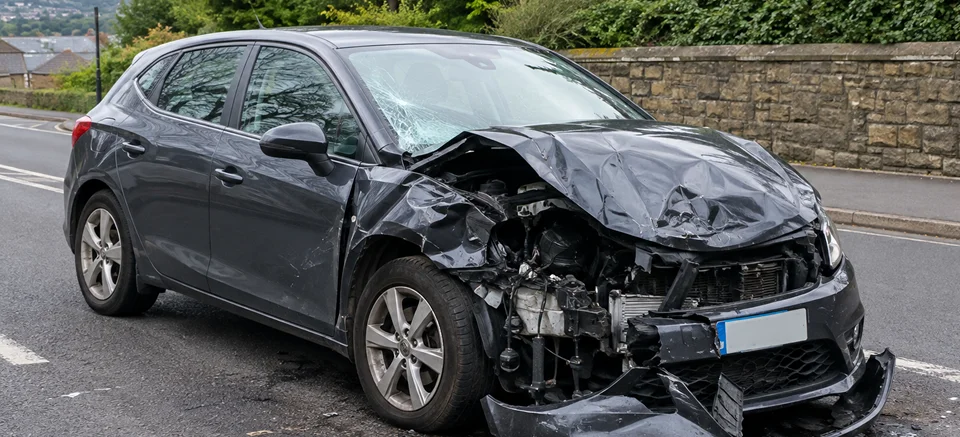
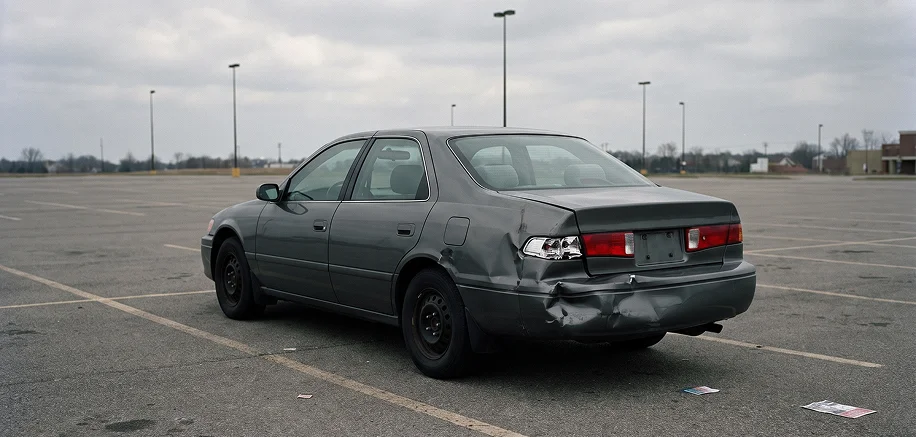
My Financed Car Was Written Off (And It Wasn't My Fault): A Step-by-Step Guide

You've just been told your car is a total loss, but it wasn't your fault. You should feel relieved, right? Instead, you're panicking because your financed car was written off, and you still owe thousands on the finance agreement. Your insurer's settlement arrives, and it's nowhere near what you need to cover your outstanding loan. You're left with negative equity and an outstanding finance balance. You're not alone.
When your car on finance is written off and it wasn't your fault, the financial implications can be complex and often frightening. This step-by-step guide explains what happens to your car finance when your vehicle is written off, how to deal with your losses, and how a claims management specialist can help you understand and manage the process.
Understanding the Problem: Car on Finance Written Off Not My Fault
When a financed car is written off after a non-fault accident, there are two separate figures to consider: your vehicle's market value and the amount you still owe under your finance agreement.
Your motor insurer will normally assess the vehicle and calculate its market value immediately before the accident. GOV.UK confirms that when a vehicle is written off, the insurer pays its current value rather than the cost of repairing it.
This can leave you with a shortfall if the outstanding finance is higher than the vehicle's market value.
Example of negative equity after a write-off
Imagine you bought a car for £25,000. After 18 months, its market value has fallen to £17,000, but you still owe £18,500 under your finance agreement.
- Original purchase price: £25,000
- Current market value: £17,000
- Outstanding finance: £18,500
- Insurance settlement: £17,000
- Potential shortfall: £1,500
This is an example of negative equity after write off.
Not being at fault for the accident does not automatically mean the other insurer will pay whatever remains on your finance agreement. Your insurance settlement and finance balance need to be considered separately.
What Happens to Your Car Finance After a Write-Off?
A write-off does not automatically cancel your finance agreement.
The exact process depends on the type of finance you have and the terms of your agreement. With arrangements such as PCP or hire purchase, the finance company can be the legal owner of the vehicle until the final payment, depending on the agreement.
Once the insurer has established the settlement value, compare it with your finance settlement figure. For example:
Insurance settlement: £17,000
Finance settlement: £18,500
Potential difference: £1,500
If you have a written off car still on finance, speak to your finance provider and find out exactly how the insurance payment will be handled. Do not simply stop making payments because the vehicle has been written off.
Step-by-Step: What to Do After a Non-Fault Car Write-Off
Once you understand the figures, you can start working through the claim.
Step 1: Report the Accident and Establish Liability
Start by reporting the accident to the relevant insurer and provide accurate details of what happened. If the accident was not your fault, establishing liability is important. The position can be different if the other driver accepts responsibility, disputes the accident or cannot be traced.
Keep copies of all correspondence, estimates, reports and receipts. These can be useful if there is a dispute about your claim or the amount you are offered.
If you need support after a non-fault accident, Simple Claims' car accident claims management service can help with recovery, replacement vehicles, repairs and claims management.
Step 2: Confirm That Your Car Has Been Written Off
An insurer may decide that repairing your vehicle is not economical or appropriate. This is generally referred to as a total loss or write-off.
There are four main insurance write-off categories:
- Category A: the vehicle must be crushed.
- Category B: the body shell must be crushed, although some parts may be salvaged.
- Category S: the vehicle has suffered structural damage but may be repaired.
- Category N: the vehicle has suffered non-structural damage and may be repaired.
You can check the official GOV.UK guidance on insurance write-offs for the full explanation.
The Financial Ombudsman Service also says that insurers commonly consider writing off a vehicle when repair costs reach around 60% to 70% of its pre-accident value, although this is an industry practice rather than a fixed rule.
Step 3: Check the Insurer's Valuation
Before focusing on any finance shortfall, check how much the insurer has offered for your written-off vehicle. The insurer will generally base its settlement on the car's market value immediately before the accident.
If you think the valuation is too low, you can challenge it. The Financial Ombudsman Service says you can provide evidence such as recognised motor valuation guides, adverts for similar vehicles and expert evidence where appropriate.
For example, if the insurer values your car at £17,000 but similar vehicles with comparable age, mileage and specification are selling for more, you can ask the insurer to review its valuation. This is worth doing because a fairer insurance settlement could reduce the amount left on your finance agreement.
If you cannot resolve a complaint with the insurer, you can get a free service for eligible disputes here.
Step 4: Understand What Happens to Your Finance
So, what happens to car finance if a car is written off?
The answer depends on the type of finance agreement you have. Hire Purchase, PCP and personal loans can work differently, so check your agreement carefully.
What is important is that a write-off does not automatically cancel your finance agreement.
Your insurer may liaise with the finance provider about the settlement. The way the insurance payment is applied can depend on your finance agreement and the circumstances of the claim.
This is why you should contact your finance provider and request an up-to-date settlement figure. Do not simply stop making payments because your vehicle has been declared a total loss. Ask the lender how the agreement will be handled while the claim is being resolved.
Step 5: Check Your GAP Insurance
If you have GAP insurance non-fault accident cover, check your policy before assuming you have to pay the difference yourself.
GAP stands for “Guaranteed Asset Protection”. Depending on the type of policy, it can cover some or all of the difference between the motor insurer's settlement and an agreed amount. For example, Finance GAP may cover a difference between the motor insurer's settlement and the amount needed to settle the finance, subject to the policy terms and limits.
Other policies can cover the difference between the insurer's valuation and the original invoice price or replacement cost.
The Financial Ombudsman Service explains that GAP policies can contain exclusions, limits and specific conditions, so do not assume that your policy will cover the entire shortfall.
You will usually need documents such as your motor insurer's settlement, finance details, original vehicle invoice and GAP policy information when making a claim.
Step 6: What to Do If You Still Owe Money
If there is still an amount outstanding after the insurance and GAP claims have been dealt with, speak to your finance provider about the balance and available arrangements. Keep copies of your finance agreement, settlement figures, insurance correspondence and GAP documents throughout the process.
Can You Recover the Finance Shortfall After a Non-Fault Accident?
This is where things can become confusing.
Being non-fault does not mean that the third-party insurer automatically pays whatever remains on your finance agreement. Your finance balance and the vehicle's market value are separate matters.
However, you may have other accident-related losses that could potentially be recoverable, depending on the circumstances. These can include reasonable recovery costs and other losses caused by the accident. This is why it is important to establish the full financial position rather than simply looking at the insurer's first settlement figure.
You should also keep records of reasonable accident-related expenses, including recovery costs and other costs you have incurred because of the accident.

A Note About Car Finance Claims in 2026
There is another issue some drivers may come across, although it is separate from the accident and write-off itself.
The FCA's current motor finance redress scheme covers certain agreements taken out between 6 April 2007 and 1 November 2024. The FCA estimates that 37% of agreements made during the relevant period may be eligible, representing around 12.1 million agreements. It has also estimated that the scheme could result in around £7.5 billion in redress.
If you have heard about the 2026 car finance compensation scheme, do not confuse it with the outstanding balance created when your car is written off. They are separate issues.
How Simple Claims Can Help
A non-fault write-off can leave you dealing with several parties at once: your insurer, the other driver's insurer, your finance provider and possibly a GAP insurer.
Simple Claims provides accident claims management for eligible non-fault accidents across Greater London. Its services include vehicle recovery, repairs, replacement vehicles and support with the claims process.
The company has extensive experience in managing non-fault accident claims, with an in-house repair garage and a dedicated claims team to support customers throughout the process. This can be particularly useful when your own car is no longer available and you need suitable transport while your claim is being dealt with.
The company can also help manage communication during the claim, giving you one less thing to deal with while you work through the financial side of a write-off.
Conclusion
Having your car on finance written off when it wasn't your fault can leave you worried about money as well as the loss of your vehicle. The key is to understand that the insurance valuation, finance balance and any GAP cover are separate parts of the situation.
Do not automatically accept an undervalued settlement, and do not assume your finance agreement ends when the car is written off. Check the figures, understand your policy and keep records of everything connected to the accident.
If you have been involved in a non-fault accident in Greater London, Simple Claims can help you manage your accident claim and arrange the support you need while your vehicle is being dealt with.
Frequently Asked Questions
1. What happens to my car finance if my car is written off and it wasn't my fault?
A write-off does not automatically cancel your finance agreement. The insurer's settlement may be used towards the outstanding finance, but if the settlement is lower than the amount owed, there may be a remaining balance. Your exact position depends on your finance agreement and the circumstances of the claim.
2. Can I challenge the insurer's valuation if I think my written-off car is worth more?
Yes. If you believe the insurer's valuation is too low, you can provide evidence of comparable vehicles with similar age, mileage, specification and condition. The Financial Ombudsman Service considers whether a valuation reflects the vehicle's fair market value before the accident.
3. Does GAP insurance cover the finance shortfall after a non-fault accident?
It can, depending on the type and terms of your GAP policy. Finance GAP, for example, can cover the difference between the motor insurer's settlement and the amount remaining on your car finance. However, exclusions, limits and deductions can apply.
4. What if I still owe money on a written-off car after the insurance payout?
First, check that the insurer's valuation is fair and ask your finance provider for an up-to-date settlement figure. Then check whether GAP insurance can cover the difference. If there is still a balance, speak to your finance provider about the available options rather than simply stopping your payments.
5. Can Simple Claims help if my financed car was written off in a non-fault accident?
Yes. Simple Claims provides accident claims management for eligible non-fault accidents, including support with vehicle recovery, replacement vehicles, repairs and the wider claims process. This can help you manage the different parties involved while your claim is being resolved.
Need Help With a Non-Fault Write-Off?
If your financed car has been written off after an accident that wasn't your fault, Simple Claims can help you understand the claims process and manage the next steps.
Need Accident Recovery?
Start your claim today with our expert team and in-house services, and get back on the road faster.
Get Instant Recovery Now