
Someone Hit My Car and Drove Off: What to Do and How to Claim
.webp)
You've just come out of the supermarket to find your car damaged by a hit-and-run driver. There's no note, no contact details, and no one around to ask. Your immediate concerns are: How will I get it fixed? Who pays? Can I recover compensation if the driver can't be found?
If you're asking what to do after someone hit my car and drove off in the UK, you may have more options than you think. Many people assume they must claim on their own insurance and pay the excess. However, depending on the circumstances, you may have another option: the Motor Insurers' Bureau (MIB), which handles claims when the responsible driver cannot be traced.
This guide explains your options after a hit-and-run, how the MIB claim process works, and what you may be able to recover.
Hit-and-Run Accidents Are More Common Than You Might Think
A hit-and-run happens when a driver is involved in a collision and fails to stop and provide the required details.
It can happen on a busy road, in a car park, outside a workplace or while your car is parked outside your home. The damage may be obvious, such as a dented bumper or smashed light, or it may be less noticeable at first.
Official Department for Transport statistics recorded 108 fatalities in hit-and-run collisions in Great Britain in 2025. Of these, 94 involved a vehicle that failed to stop at the scene. These figures cover collisions involving casualties, so they do not represent every hit-and-run involving vehicle damage alone.
For context, there were 127,883 reported road casualties of all severities in Great Britain in 2025, alongside 29,918 people killed or seriously injured.
The figures show why knowing what to do after an incident matters, even when the damage initially appears minor.
What Should You Do If Someone Hits Your Car and Drives Off?
The first hours after discovering your car has been hit-and-run are critical. How you act immediately will determine whether you can claim and for how much.
Your priority should be safety. If the incident has just happened and you are still at the scene, move to a safe location if necessary and check whether anyone is injured. Then you must take the following steps:
- Report the incident to the police
If another driver has damaged your car and left without providing their details, report the incident to the police.
The Highway Code states that drivers involved in a collision causing damage or injury must stop and provide relevant details. If those details are not given at the scene, the collision must be reported to the police as soon as reasonably practicable and, in the circumstances covered by the rule, within 24 hours.
For MIB untraced-driver claims, MIB currently states that a hit-and-run must be reported to the police within 14 days of the incident. Reporting it promptly is therefore important.
Keep the police reference number you receive. It may be needed by your insurer or when dealing with a compensation claim.
- Document the damage
Take photos and videos of your car from all angles. Photograph the damage, the scene, nearby CCTV cameras, traffic signs, and the time/date if visible. If there's any paint transfer from the other vehicle, photograph this closely.
Look for any clues: paint colour, vehicle height (was it a van or a small car?), broken parts left at the scene (headlight, mirror, paintwork), witness contact details if anyone saw what happened.
- Gather witness information
If anyone witnessed the incident, get their name, contact number, and a brief description of what they saw. Witnesses are invaluable. Police will try to trace them, but having their details will strengthen your hit-and-run claim in the UK.
- Report to your insurance company
Tell your insurer immediately. Give them the police reference number. Explain that the driver is untraced. Your insurer will advise whether you should claim under your own policy (and pay your excess) or pursue a claim through the Motor Insurers' Bureau.
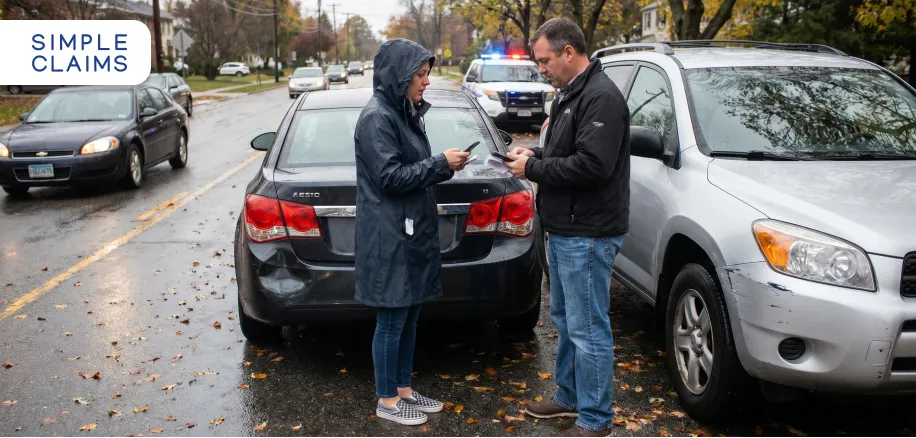
If you're unsure what happens if someone hits your car and drives off, following these steps can help you understand your options for a car accident claim in London and protect your position.
.webp)
Who Pays If You Don't Know Who Hit Your Car?
If you're looking to claim when you don't know who hit you, the options available will depend on what happened, what insurance cover you have and whether the other driver can be identified.
- If the driver is found and insured, their insurer may deal with your claim. If the driver is identified but uninsured, a claim may potentially be dealt with through the MIB.
- If the driver cannot be identified, they may be treated as an untraced driver. In these circumstances, MIB may be able to consider a claim, but its rules and eligibility requirements apply.
- Your own comprehensive insurance may also cover damage to your vehicle. However, you may have to pay your policy excess, and the claim could affect your no-claims discount depending on your policy and how your insurer handles the incident.
- If you only have third-party cover, damage to your own vehicle is generally not covered under that policy.
When Does an Untraced Driver Claim Apply?
An untraced driver claim relates to an accident where the driver responsible cannot be identified. This can happen when someone leaves the scene, fails to provide their details or gives false information.
MIB deals with claims involving untraced drivers, but not every case will automatically qualify for compensation. Claims are assessed under the rules of the Untraced Drivers' Agreement.
Property damage can be subject to specific restrictions. In particular circumstances involving an unidentified vehicle, MIB property damage compensation can be subject to a £400 specified excess, and the rules can require significant personal injury before certain property damage can be compensated.
MIB defines significant personal injury for these purposes using specific criteria, so simply having damage to a vehicle does not necessarily mean MIB will pay for the repairs.
This is one reason it is important not to assume that an MIB claim will automatically replace a comprehensive insurance claim.
How to Claim Through the MIB
If your circumstances may qualify, you can make a claim directly with MIB or appoint a professional representative to act on your behalf.
The general process involves:
- Report the incident to the police and keep your reference number.
- Notify your insurer about the accident.
- Collect your evidence, including photographs, witness details, CCTV or dashcam footage and repair information.
- Complete the MIB claim form with details of the accident, your insurance, the damage and any injuries.
- Allow MIB to investigate the circumstances and available evidence.
- Wait for the decision on whether compensation is payable and how much you may be entitled to receive.
MIB says claims can take from a few months to considerably longer depending on their complexity, the evidence available and whether other organisations need to be involved. There is therefore no reliable fixed timeframe for every claim.
You can find the current eligibility requirements and start a claim directly through MIB.
What Evidence Can Help Your Claim?
Evidence can make a significant difference when the other driver has disappeared.
Try to keep:
- Police reports and reference numbers
- Photographs and videos of the damage
- CCTV or doorbell footage
- Dashcam recordings
- Witness names and contact details
- Details of the location and time of the incident
- Vehicle registration details, if available
- Repair estimates and invoices
- Your insurance details
- Any correspondence with your insurer, police or MIB
Do not repair or dispose of damaged parts before checking whether your insurer or claims handler needs to inspect them.
What Can You Claim After a Hit-and-Run?
The compensation available depends on the circumstances of the accident and the applicable claim route.
Potential losses can include vehicle repair costs or, where appropriate, the value of a vehicle that is treated as a total loss. Personal injury may also be considered where someone was injured in the accident.
However, MIB claims are governed by specific agreements, so not every type of loss is automatically recoverable. Property damage claims involving untraced drivers can have particular restrictions, including the specified excess mentioned above.
Your own insurance policy will have its own terms, excess and limits, so check these before deciding how to proceed.
How Simple Claims Can Help After a Hit-and-Run
A hit-and-run can leave you dealing with the police, your insurer, repair arrangements and potentially the MIB at the same time.
Simple Claims can help you understand the options available after a non-fault accident and organise the information needed to move your claim forward. This can include helping you understand the claims process, gathering relevant information and communicating with the appropriate parties.
Every accident is different, so the right route will depend on your circumstances, insurance cover and the evidence available.
What Should You Do Next?
If you are thinking that someone hit my car and drove off in the UK, don't leave the matter until you have checked your options.
Report the incident appropriately, photograph the damage, preserve any dashcam or CCTV evidence, speak to witnesses and notify your insurer. If the driver can be identified, the claim may follow a different route. If the driver remains untraced, the MIB may be relevant, but its rules for vehicle damage are more restrictive than many people realise.
Most importantly, don't assume that you have to pay the entire repair bill before finding out what options are available.
Need Help With Your Claim?
Dealing with a hit-and-run can be stressful, especially when you don't know who was responsible. Simple Claims can help you understand your options and guide you through the next steps.
Need Accident Recovery?
Start your claim today with our expert team and in-house services, and get back on the road faster.
Get Instant Recovery Now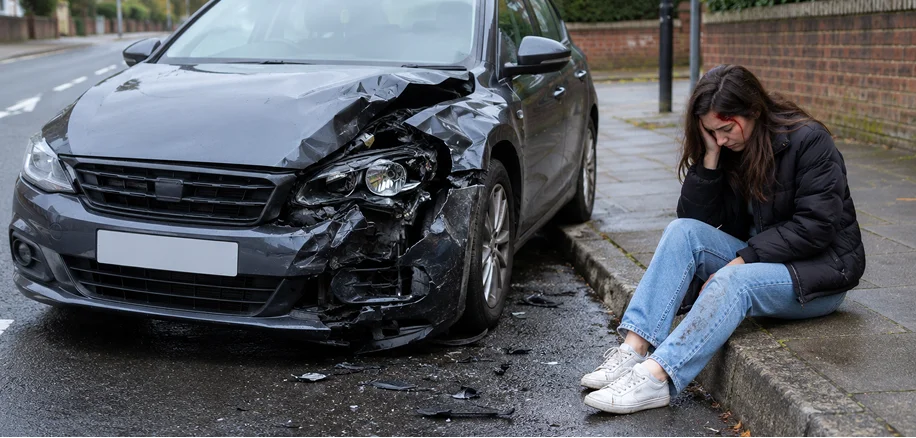




.svg)


